









Are Standing Desks Worth It? What the Research Actually Says
Standing desks have been marketed as everything from a productivity booster to a life-extension tool. You've probably seen the headlines: "Sitting is the new smoking." You've possibly glanced at a colleague who swapped their fixed desk for a height-adjustable one and wondered whether you should do the same. The global standing desk market has grown dramatically over the past decade, and in 2026, they're no longer a novelty — they're standard equipment in forward-thinking offices and home setups worldwide.
But are they actually worth it? Or are standing desks an expensive placebo that office wellness culture sold you? The honest answer, as with most things in health and ergonomics, sits somewhere in the middle — and understanding where requires a clear-eyed look at what the research actually demonstrates, what it doesn't, and what factors matter most when making your decision. This article cuts through the noise and gives you a grounded, research-informed answer.
What the Research Actually Shows
The scientific case for breaking up prolonged sitting is solid. A landmark 2012 study published in the British Journal of Sports Medicine found that each hour of television viewing (as a proxy for prolonged sitting) was associated with a 22-minute reduction in life expectancy among adults over 25. A 2015 meta-analysis of 13 studies involving over one million participants, also published in The Lancet, found that 60–75 minutes of moderate-intensity physical activity per day could eliminate the elevated mortality risk associated with eight or more hours of sitting. The takeaway: sedentary time is a genuine health concern, and it's distinct from whether or not you exercise.
Where standing desks enter this picture is as a tool for reducing sedentary time during working hours — not as a replacement for exercise, but as a way to introduce movement and postural variety into the 6–10 hours many knowledge workers spend at a desk. Research from the University of Leicester and the NHS-funded SMART Work trial found that height-adjustable desks, when combined with behavioral coaching, significantly reduced sitting time and improved reported energy levels and musculoskeletal comfort over a 12-month period. The desk alone isn't magic; the behavior change it enables is what drives the benefit.
The Real Benefits (Backed by Evidence)
When you strip away the wellness marketing language, the evidence for standing desks clusters around a few genuinely supported outcomes. Reduced sedentary time is the most consistent finding across studies — workers with sit-stand desks reliably sit less throughout the day, typically reducing seated time by 1–2 hours on average. That cumulative reduction in prolonged static posture has real physiological implications over months and years.
Reported improvements in energy, mood, and comfort are also well-documented in self-report studies, even when objective productivity metrics show mixed results. A study from Texas A&M University found that call center workers using standing desks were 45% more productive over a six-month period compared to seated colleagues — though critics note the methodology conflated multiple variables. More conservative reviews suggest the productivity effect is real but modest, and likely mediated by reduced discomfort and fatigue rather than any direct cognitive enhancement from standing.
Blood glucose regulation is another area where evidence is emerging. A 2013 study in Diabetes Care found that breaking sitting time with short bouts of standing or walking lowered post-meal blood glucose levels significantly. For people managing metabolic health, the implications of even small behavioral changes at the desk level are meaningful.
Where the Hype Outpaces the Science
It's worth being honest about where the standing desk narrative gets ahead of the data. The calorie-burn argument — frequently cited as a reason to switch — is largely overblown. Standing burns approximately 8–10 more calories per hour than sitting. Over a full workday, that translates to roughly 50 additional calories: the equivalent of a small apple. If weight management is your primary motivation for buying a standing desk, the evidence does not support the investment on that basis alone.
Similarly, the "sitting is the new smoking" comparison, while attention-grabbing, is epidemiologically imprecise. Smoking carries a dramatically higher relative risk for multiple cancers and cardiovascular disease than sedentary behavior does. The comparison was a rhetorical device, not a clinical equivalence, and treating it as literal science does a disservice to both public health messaging and informed consumer decision-making. Standing desks are a useful ergonomic tool — they don't need to be oversold to be genuinely valuable.
There's also a less-discussed downside: prolonged standing carries its own risks. Extended static standing has been associated with lower back discomfort, varicose veins, and fatigue. A 2017 study published in Ergonomics found that two hours of continuous standing led to increased discomfort and reduced mental state scores. The takeaway from the research isn't "stand all day instead of sit all day" — it's that dynamic postural variety, alternating between sitting, standing, and movement, is the actual goal.
The Posture and Back Pain Question
Back pain is consistently cited as one of the top reasons people consider switching to a height-adjustable desk, and the research here is genuinely encouraging — with important caveats. Multiple studies have found that sit-stand desks reduce reported upper back and neck pain, particularly when combined with ergonomic setup guidance. A study in Applied Ergonomics found a 54% reduction in upper back and neck pain after four weeks of sit-stand desk use in a sedentary office population.
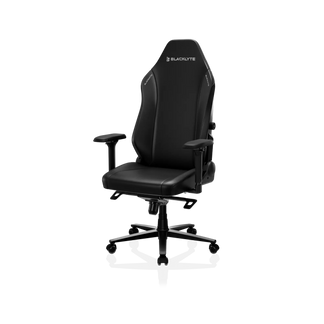
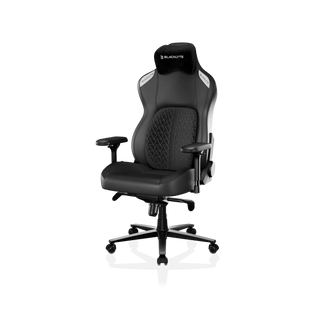
However, the desk is only one part of the ergonomic equation. If you switch to a height-adjustable desk but continue to slouch, crane your neck forward, or position your monitor incorrectly, you'll carry those problems through to your standing position as well. The desk creates the possibility for better posture — your setup and habits determine whether that possibility is realized. This is precisely why ergonomic furniture should be considered as a system: the desk, the chair, the monitor position, and the behavioral habits you build around them all work together.
At Blacklyte, our ergonomics resource hub covers exactly this — how desk height, chair adjustment, and monitor positioning interact to create a genuinely posture-supportive workspace, not just a collection of expensive furniture.
Who Benefits Most from a Standing Desk
The research and practical experience both point to standing desks delivering the most value for specific user profiles. Knowledge workers who spend the majority of their day at a computer — developers, writers, analysts, designers — and who currently sit for six or more hours without meaningful breaks are the clearest beneficiaries. The shift from a fully static seated environment to one where posture can vary throughout the day addresses the root issue directly.
People with existing lower back discomfort or a history of musculoskeletal issues also tend to report meaningful improvement, particularly when the desk is part of a broader ergonomic setup. Gamers who run long sessions are another group that benefits substantially — the ability to adjust height between seated gaming sessions and standing breaks, or to shift position during lighter tasks, reduces the cumulative load that marathon sessions place on the spine and hips. Our Gaming Hub explores this in more depth, including how setup ergonomics affect both performance and long-term physical health.
What to Look For in a Standing Desk
If you've decided the research makes a compelling enough case for your situation, the next question is what actually differentiates a quality height-adjustable desk from a budget option that will frustrate you within months. Here's what the evidence and engineering both point to as the factors that matter:
- Height range: Your desk needs to comfortably accommodate both your seated and standing ergonomic positions. The correct standing desk height places your forearms roughly parallel to the floor, with your monitor at or slightly below eye level.
- Motor stability and noise: A dual-motor system provides smoother, more stable transitions and handles heavier desktop loads without drift or wobble. Single-motor designs can struggle with multi-monitor setups.
- Memory presets: The ability to save your ideal sitting and standing heights removes friction from the transition and dramatically increases how often you actually use the sit-stand function in practice.
- Cable management: A desk that creates cable chaos defeats much of its own utility. Integrated channels, routing ports, and cable trays keep your workspace functional as it changes height.
- Surface quality: The desktop surface should be large enough to accommodate your full setup at any height, and resistant to the wear that comes with daily use over years.
- Build quality and warranty: Height-adjustable desks contain moving parts that will be operated hundreds of times over their lifespan. A meaningful warranty (ideally extendable) is a signal of manufacturer confidence in their engineering.
These aren't abstract checkboxes — they're the variables that determine whether a standing desk becomes a daily-use tool that transforms your workspace or a novelty that gets locked at one height and forgotten.
The Blacklyte Verdict
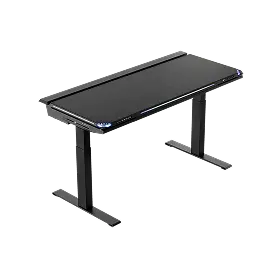
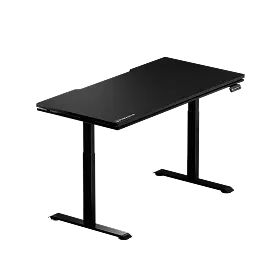
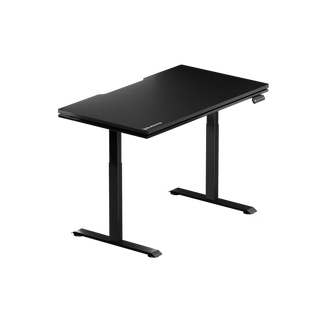
At Blacklyte, we've spent 20 years engineering workspace furniture for people who take their setup seriously — competitive gamers, remote professionals, and hybrid workers who understand that performance and health aren't separate concerns. Our Atlas Standing Desk lineup was designed with exactly this research context in mind: not to sell the fantasy that a desk will transform your health overnight, but to deliver the hardware that makes the behavioral change sustainable.
The Atlas Desk and Atlas Lite both feature dual-motor lift systems, programmable height presets, and integrated cable management, while the Atlas adds a magnetic surface system and smart lighting controls via the Atlas Driver software — because a desk you actually use is worth infinitely more than one you bought for the right reasons and abandoned for the wrong ones. These aren't features for features' sake; they're solutions to the friction points that cause most sit-stand desk owners to stop using the adjustment function within the first six months.
The research answer to "are standing desks worth it?" is: yes, conditionally. They're worth it when they're quality-built, properly set up, and used as intended — as a tool for postural variety, not as a substitute for movement or exercise. They're worth it when they fit into a broader ergonomic system that includes the right chair, the right monitor position, and habits that support the body over the long term. And they're worth it when you invest in hardware that will hold up to years of daily use without losing stability or precision. If you're ready to see how our desk lineup and ergonomic chairs work together as a complete setup, compare our desk models to find the right fit for your space.
The Bottom Line
Standing desks are a legitimate ergonomic investment — not a miracle product, but a genuinely useful tool when chosen wisely and used correctly. The research consistently supports reducing prolonged sedentary time, improving postural variety, and addressing musculoskeletal discomfort in desk-based workers. The caveats are equally real: excessive standing carries its own risks, calorie-burn benefits are minor, and the desk alone won't fix poor ergonomic habits. What matters is the combination of quality hardware, correct setup, and intentional use. Get that right, and a height-adjustable desk earns its place in your workspace many times over.
Ready to Build a Setup That Works as Hard as You Do?
Explore Blacklyte's full range of height-adjustable standing desks, ergonomic gaming chairs, and workspace accessories — engineered for performance, built for the long run.
Shop All ProductsContact Us


